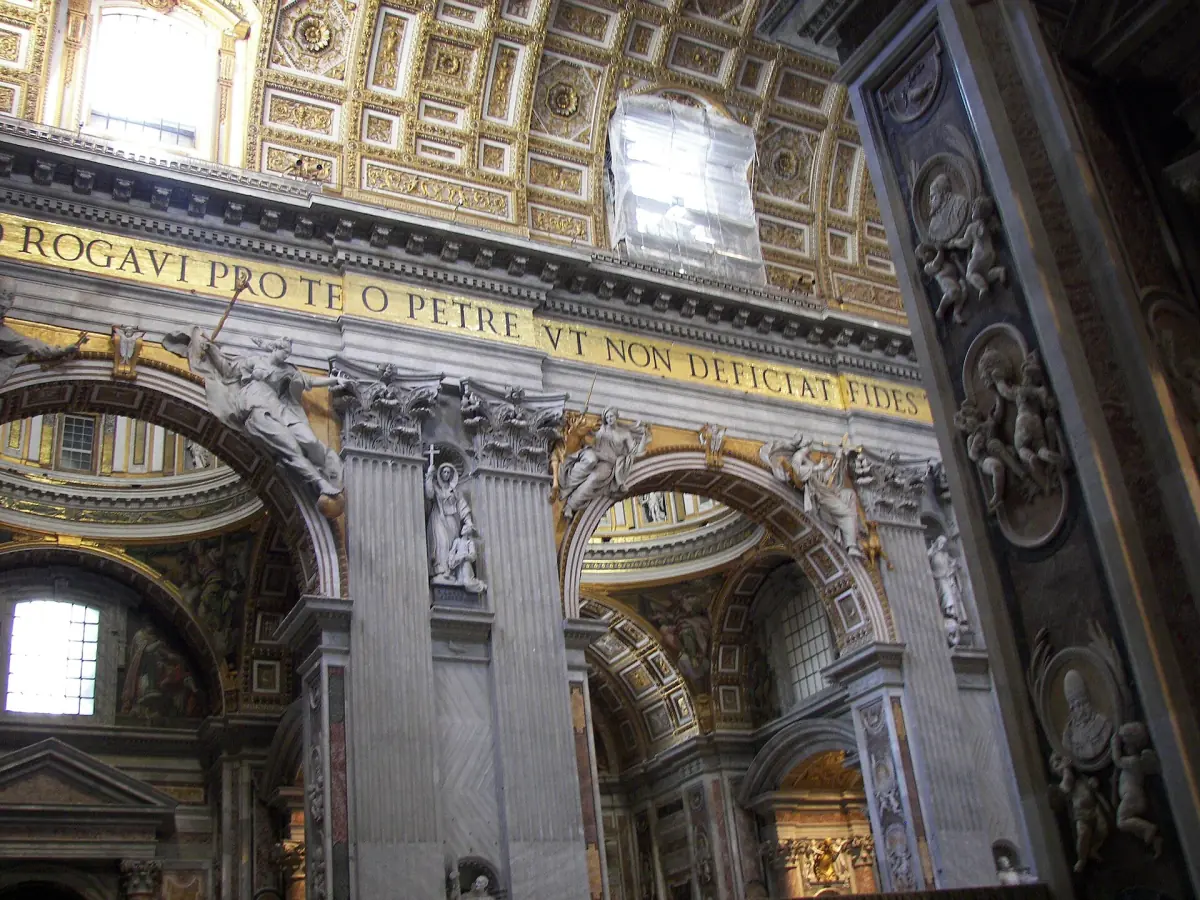
The Vatican Grottoes at a glance
The Vatican Grottoes occupy the space between the floor of today's basilica and the level of the old Constantinian basilica that stood here until the 16th century. They hold the tombs of popes, saints and a few royals, together with chapels and fragments of the old church.
Visiting is free. The grottoes are reached from inside St. Peter's Basilica, so you only need to pass the basilica's security check. They close earlier than the church, so do not leave them until the very end of the day.
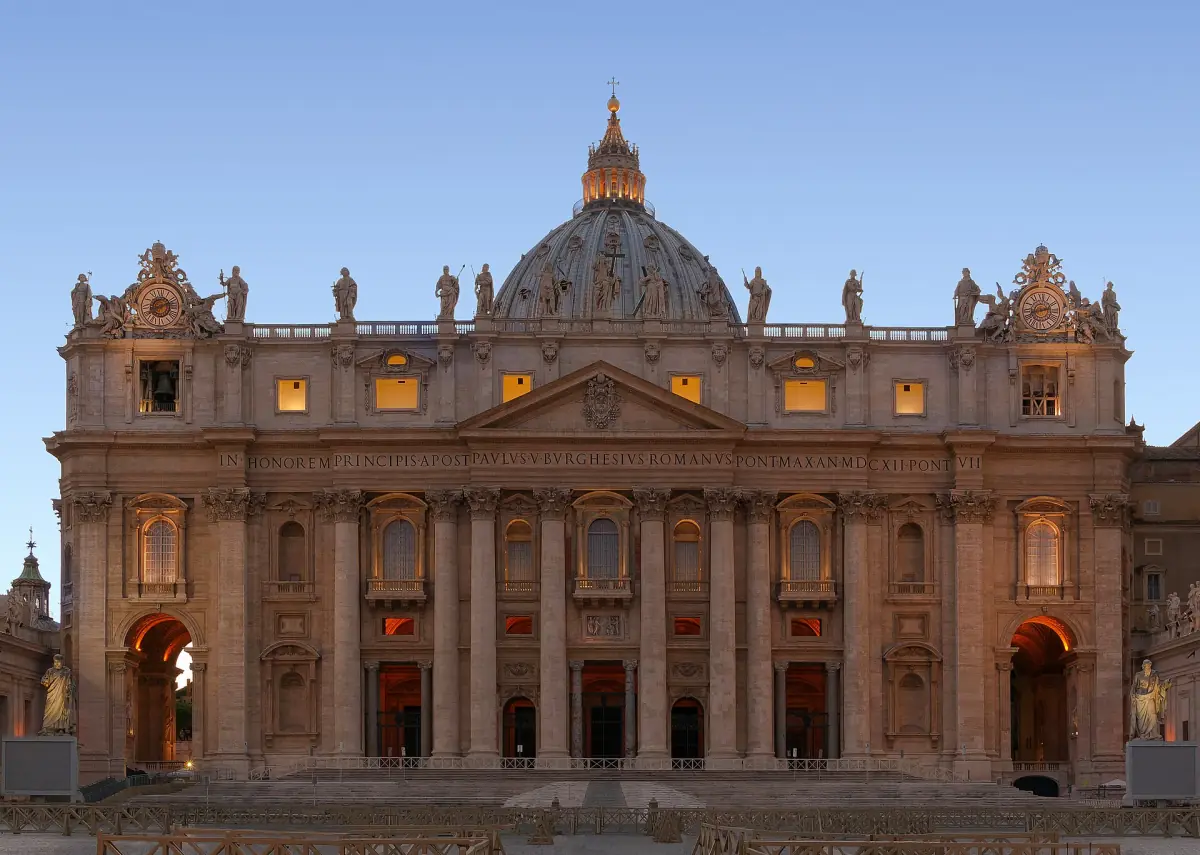
Popes buried in the Vatican Grottoes
Some of the best-known tombs along the route.
Benedict XVI
The German pope, who resigned in 2013 and died in 2022, was buried in January 2023 in the tomb that had first held John Paul II.
Paul VI and John Paul I
Paul VI, who led the Church through the end of the Second Vatican Council, and John Paul I, who reigned for only 33 days in 1978.
Pius XII and Pius XI
The popes of the interwar years and the Second World War. Pius XII ordered the excavations that uncovered the necropolis below.
Near St. Peter
The grottoes run around the area of St. Peter's tomb beneath the papal altar, which explains why so many popes chose to be buried here.
The Scavi tour →Papal tombs in the basilica above
Not every pope lies below ground. Several of the most visited tombs are on the main floor of St. Peter's Basilica:
- St. John Paul II rests in the Chapel of St. Sebastian, on the right side of the nave, after his remains were moved there from the grottoes in 2011 for his beatification.
- St. John XXIII, the pope who opened the Second Vatican Council, lies in a glass coffin under the Altar of St. Jerome.
- St. Pius X rests in the Chapel of the Presentation in the left aisle.
- Grand monuments by Bernini for Urban VIII and Alexander VII, and by Canova for Clement XIII, are among the great sculptures of the basilica.
Pope Francis is not buried at the Vatican. At his own wish, he was laid to rest in 2025 in the Basilica of Santa Maria Maggiore in Rome.
Tours with the papal tombs
Guided tours of St. Peter's Basilica, the grottoes and the dome, with live prices and availability.
Tips for visiting the papal tombs
How to fit the grottoes into your visit.
Follow the signs
Look for the signs for the "Grotte Vaticane" inside the basilica. The route is one way and usually leads out of the building, so see the main church first.
Earlier closing
The grottoes close before the basilica. With an evening time slot, for example at 6:00 pm, they are already shut.
Opening hours →A place of prayer
Many pilgrims come to pray at the tombs, especially at John Paul II's and Benedict XVI's. Keep your voice down and move on after a short stop.
Booked options
The official Pétros ení experience includes the grottoes, and many guided basilica tours pass through them.
Basilica tickets →Papal tombs: frequently asked questions
Are the Vatican Grottoes free?
Yes. Access to the grottoes and the papal tombs is free and is reached from inside St. Peter's Basilica.
Where is Pope John Paul II buried?
In the Chapel of St. Sebastian on the main floor of St. Peter's Basilica, on the right side of the nave.
Where is Pope Benedict XVI buried?
In the Vatican Grottoes beneath St. Peter's Basilica, in the tomb that first held John Paul II.
Where is Pope Francis buried?
In the Basilica of Santa Maria Maggiore in Rome, not at the Vatican.
What is the difference between the grottoes and the Scavi?
The grottoes lie just below the basilica floor and are free. The Scavi are the Roman necropolis deeper down, around St. Peter's tomb, and can only be visited on a booked tour.